
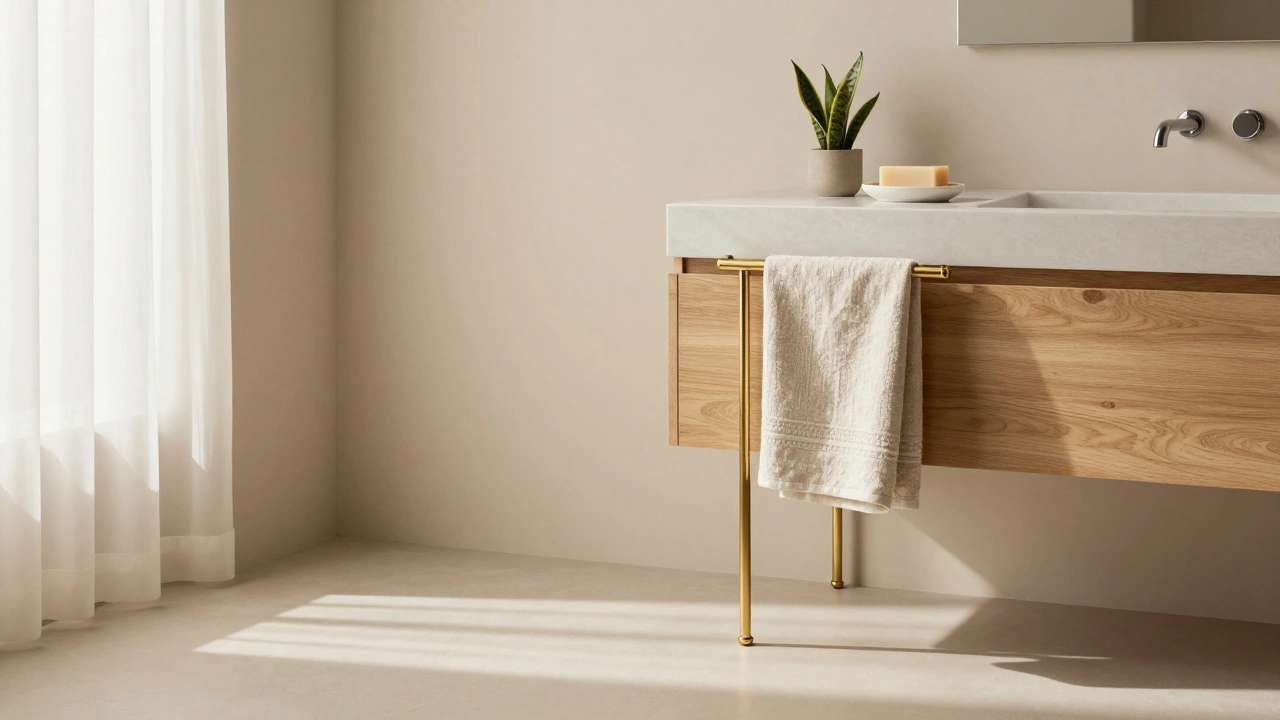
Most people think a zen bathroom means white walls, bamboo mats, and a single candle. But real zen isn’t about aesthetics-it’s about how you feel when you step in. If your bathroom feels like a storage closet for expired shampoo, tangled towels, and random toiletries, no amount of incense will fix it. Creating a zen bathroom isn’t about buying expensive products. It’s about removing what doesn’t serve you and keeping only what brings peace.
Start by clearing everything out
Take every single item out of your bathroom. Not just the cabinet, but the shower caddy, the counter, the back of the door, the towel rack. Put it all on the floor. Now, ask yourself one question for each thing: Do I use this regularly, or am I just keeping it because it was a gift?
Most people discover they own three bottles of the same face wash, three loofahs they never use, and five travel-sized shampoos from hotels they haven’t touched in two years. These aren’t clutter-they’re emotional anchors. Let them go. Donate unopened products. Recycle empty containers. Toss anything expired. You don’t need a backup for every product you own. Your bathroom isn’t a warehouse.
Choose a calming color palette
Colors shape mood more than you realize. Harsh whites, bright blues, or busy patterns create visual noise. A zen bathroom leans into soft, natural tones. Think warm beige, muted sage, soft greys, or off-white. These colors don’t shout. They breathe. If your tiles are cold or too glossy, consider adding a textured rug or a woven mat. It softens the space without adding color.
Paint is the cheapest way to change energy. A single coat of Benjamin Moore’s "Revere Pewter" or Sherwin-Williams’ "Sea Salt" can turn a sterile room into a quiet retreat. Avoid glossy finishes on walls-matte or eggshell reflect less light and feel more soothing.
Organize with intention, not containers
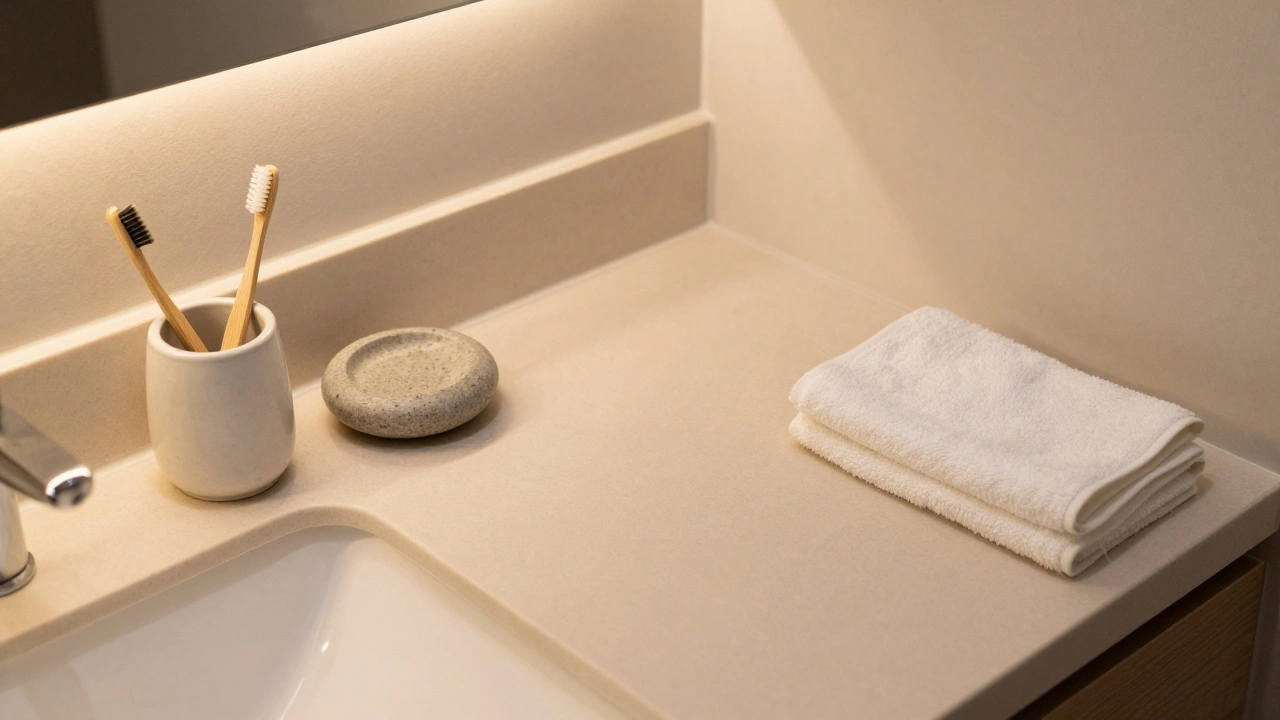
Storage isn’t the enemy. Cluttered storage is. Instead of buying ten plastic bins labeled "for bathroom," think about what you actually use daily. Keep only your morning essentials on the counter: one soap, one toothbrush, one towel. Everything else goes out of sight.
Use shallow drawers or closed cabinets for extra products. Install a simple floating shelf above the toilet for one or two books or a small plant. Avoid open shelves unless they hold only things you love to look at-a single ceramic bowl, a stone candle, a folded linen towel. Less is louder here.
Lighting that feels like dawn, not a hospital
Fluorescent lights in bathrooms are the opposite of zen. They’re harsh, flat, and draining. Replace them with warm white LEDs (2700K to 3000K). If possible, install dimmers. You don’t need bright light to brush your teeth at 6 a.m. A soft glow is enough.
Add layered lighting: a ceiling fixture for general light, a sconce beside the mirror for task lighting, and a small lamp or candle for ambiance. Natural light is best. If your bathroom has a window, keep it unobstructed. Sheer curtains let light in without showing the outside world.
Bring in nature-without the mess
Plants make spaces feel alive. But not all plants belong in a steamy bathroom. Choose ones that thrive in low light and high humidity: snake plants, pothos, or peace lilies. One small plant on the counter or a hanging vine near the window is enough. Too many plants feel like a greenhouse, not a sanctuary.
Stone, wood, and ceramic are better than plastic. A wooden soap dish, a stone soap bar holder, or a ceramic toothbrush cup adds warmth. These materials age gracefully. Plastic looks cheap and doesn’t calm the senses.
Make every touch feel intentional
What you touch matters. A cheap plastic toothbrush holder feels cheap. A heavy ceramic one feels like a ritual. Swap out flimsy towel racks for solid brass or matte black metal. Choose thick, absorbent cotton towels in neutral tones. Fold them neatly, not balled up. The way you store things teaches your brain how to behave in the space.
Use a soap that smells like nothing-or like sandalwood, lavender, or eucalyptus. Avoid synthetic fragrances. They irritate the senses instead of soothing them. A bar of soap on a draining dish feels more mindful than a pump bottle squirting chemicals.
Keep the floor clear
A cluttered floor is the biggest silent stressor. No shoes. No laundry baskets. No plastic bins. If you need to store things, tuck them under the sink or in a cabinet. The floor should feel open. Even a small rug can anchor the space and make it feel grounded.
Wipe down the floor daily. A damp cloth is enough. A clean floor makes the whole room feel fresh, even if nothing else changed.
Build a morning ritual
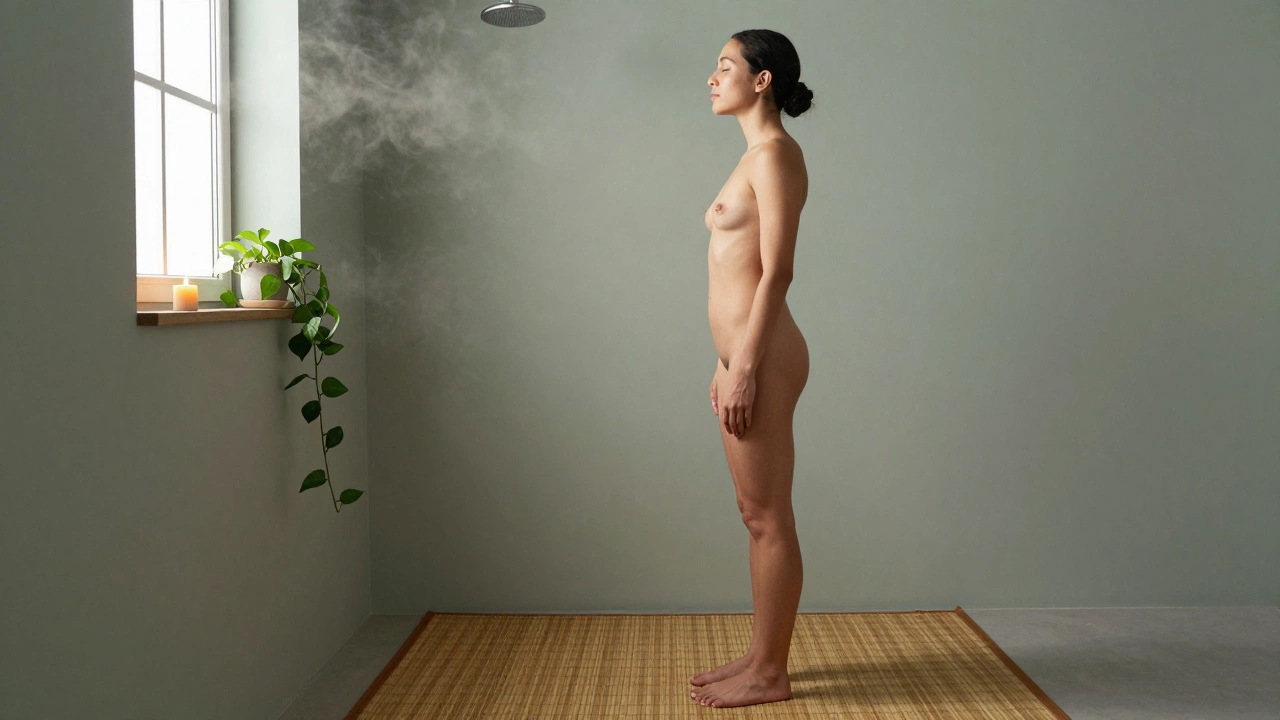
A zen bathroom isn’t just how it looks-it’s how you use it. Try this: Before turning on the light, take three slow breaths. Splash your face with lukewarm water. Use your soap slowly. Don’t rush. Let the steam rise. Feel the towel against your skin. This isn’t about being perfect. It’s about being present.
Put your phone in another room. No scrolling while brushing your teeth. No checking emails in the shower. This space is for you, not for the world.
What doesn’t belong
Here’s what to remove immediately:
- Expired products (check the bottom of bottles)
- Plastic travel bottles you never use
- Random hair tools you don’t need daily
- Old magazines or junk mail
- Over-the-door hooks with 10 towels hanging
- Chemical-heavy air fresheners
- Anything that makes you sigh when you see it
These items don’t add value. They add noise. Take them out. Don’t replace them. Just leave the space empty for a few days. Notice how quiet it feels.
It’s not about perfection
A zen bathroom doesn’t have to look like a luxury hotel. It doesn’t need marble countertops or a freestanding tub. It just needs to feel like a place where you can exhale. If your partner leaves their toothbrush out, don’t stress. If the towel gets wrinkled, let it be. Zen isn’t control-it’s acceptance.
Start small. Clear one shelf. Change one light. Swap one product. Over time, the space will change you, not the other way around.