Best Artwork for Dining Room: What Works and Why
When you’re picking the best artwork for dining room, a piece of visual art chosen to complement the function and mood of a dining space. Also known as dining room wall art, it’s not just decoration—it’s the quiet anchor that ties the room together. Too often, people grab a print because it matches the curtains, only to realize it feels off. The right artwork doesn’t shout. It invites. It makes people pause before taking their first bite.
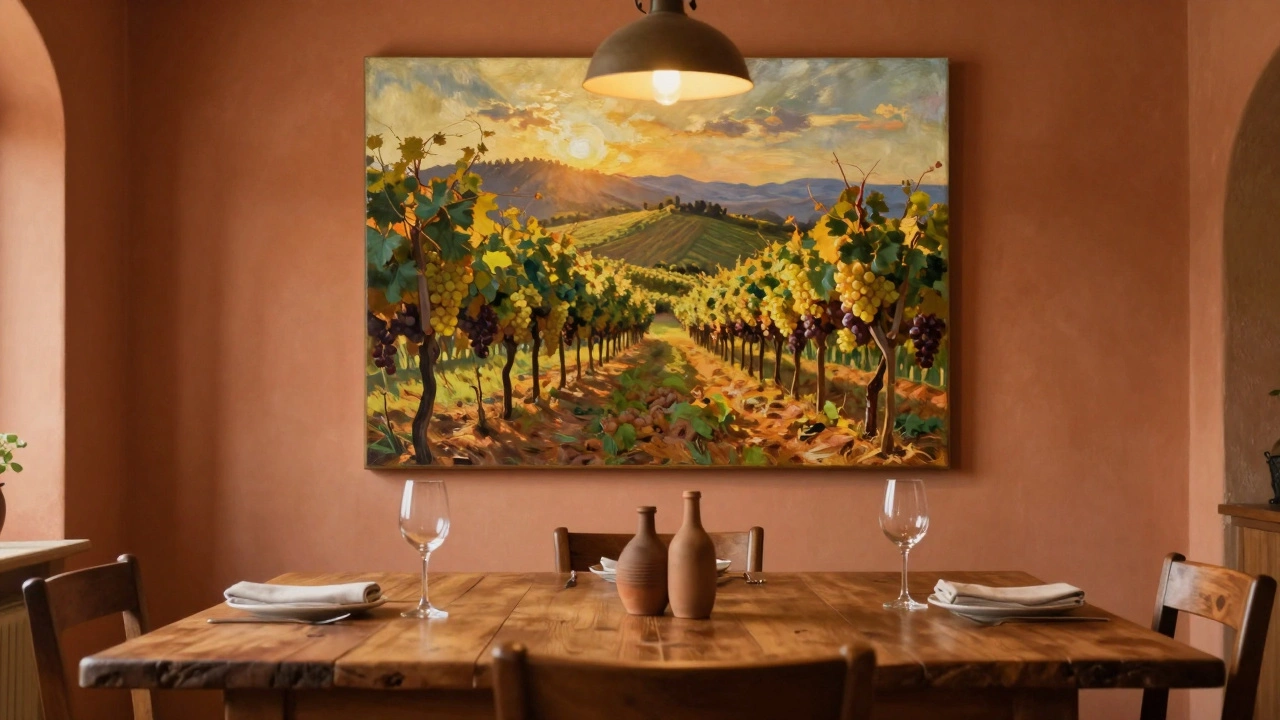
Size matters more than you think. A tiny painting above a long dining table looks lost. A huge piece crowding a small wall feels heavy. The sweet spot? The artwork should be about two-thirds the width of your dining table. That’s not a rule from a design magazine—it’s what works in real homes. And placement? Hang it so the center is at eye level when you’re seated. That’s about 60 inches from the floor. If you’re using a polyptych, a multi-panel artwork, often three or more panels, designed to be viewed as a single composition. Also known as multi-panel painting, it works beautifully in dining rooms because it creates rhythm without overwhelming. Think of it like a visual playlist—each panel adds a note, but the whole thing sings together.
Style? Go for something that feels warm, not cold. Abstract art can work if it has rich textures or earthy tones. Landscapes with soft lighting help people relax. Avoid anything too chaotic or dark—dining rooms should feel inviting, not intense. And color? Let the artwork pull from your tableware, rug, or even the wood tone of your chairs. It doesn’t have to match exactly, but it should whisper, "I belong here."
Lighting makes or breaks it. A dimly lit painting looks like a shadow. A well-placed picture light or recessed spot just above it brings the art to life. You don’t need a designer to do this—just a simple LED track light or a wall sconce angled down. The goal is to make the art feel like part of the meal, not an afterthought.
And don’t forget: your dining room isn’t a gallery. It’s where people talk, laugh, argue over who gets the last slice of pie. The artwork should support that, not compete with it. A single strong piece often beats a whole gallery wall. One meaningful image, well-chosen, does more than five random ones.
Below, you’ll find real examples and smart fixes from actual homes—no fancy studios, no million-dollar budgets. Just what works, when it works, and why. Whether you’re hanging a single print or a three-panel polyptych, you’ll find something that clicks.