Dining Room Organization: Practical Tips for Clutter-Free Spaces
When you think about dining room organization, the system of arranging furniture, storage, and decor to make eating and entertaining easier and more pleasant. Also known as dining room layout planning, it’s not just about keeping things tidy—it’s about making every meal, every gathering, and every day run smoother. A messy dining room doesn’t just look bad—it makes cooking, serving, and even sitting down to eat feel like a chore. The good news? You don’t need a full renovation to fix it. Small, smart changes make a huge difference.
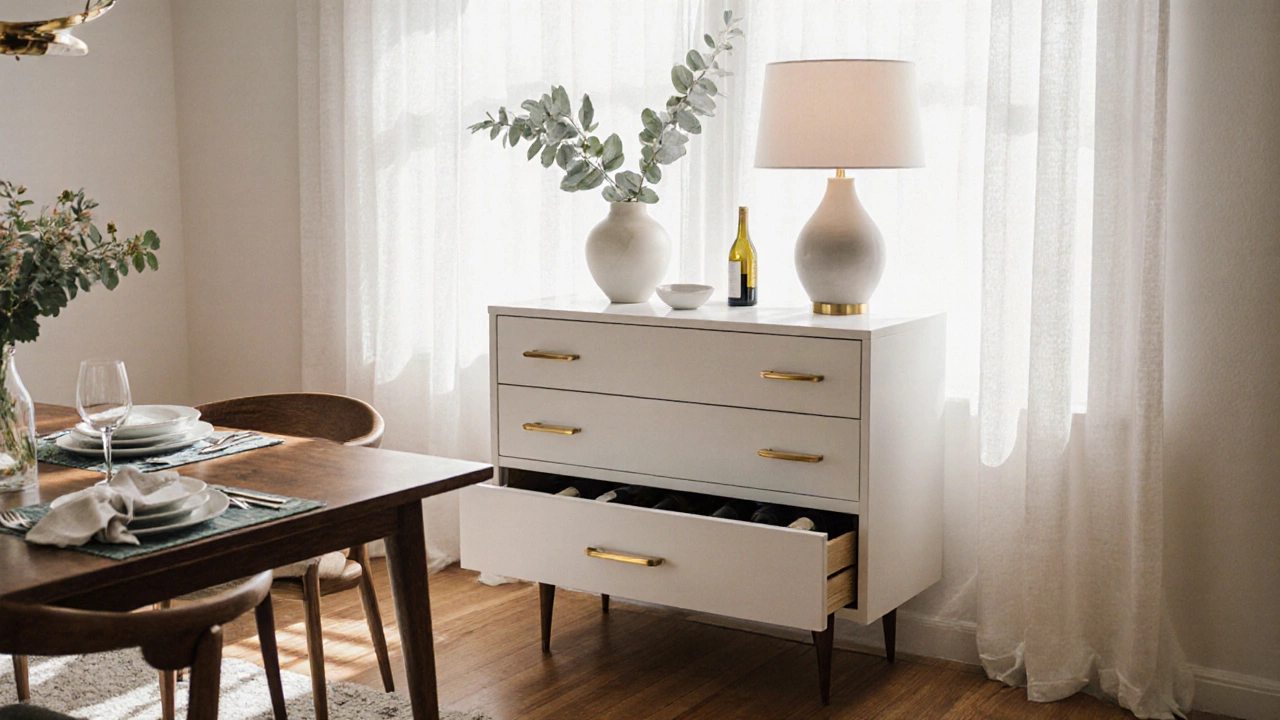
Dining room storage, the hidden or built-in solutions that keep dishes, linens, and serving tools out of sight but within reach. Also known as sideboard organization, it’s the secret weapon in any well-run dining space. A sideboard isn’t just for show—it’s your command center. Use it to store napkins, cutlery, wine glasses, and even extra table settings. If you don’t have one, a narrow console or even a cart can do the job. The key? Group like items together. Keep all the coffee mugs in one bin, all the serving spoons in another. Label if you need to. This isn’t about perfection—it’s about speed. When you’re rushing to get dinner on the table, you shouldn’t have to dig through drawers.
Dining room furniture, the essential pieces—table, chairs, sideboard, hutch—that define how the space functions and flows. Also known as dining set arrangement, choosing the right ones can turn a cramped room into a welcoming one. A bulky table in a small room? That’s not a statement—it’s a problem. Look for extendable tables, benches instead of chairs, or fold-down wall tables if space is tight. Chairs with arms take up more room—opt for sleeker styles. And don’t forget the floor. A rug that’s too small makes the space feel broken. Go bigger. Let the rug under the table with chairs pulled out. That’s the rule.
And then there’s the clutter. The mail that piles up on the sideboard. The extra chairs shoved into the corner. The random bowls and jars that somehow ended up on the dining table. These aren’t just eyesores—they’re mental distractions. A dining room should feel calm, not chaotic. Start by removing anything that doesn’t belong. Keep only what you use daily. Store the rest. If you rarely host big dinners, don’t keep ten extra chairs. Store them. If you only use your china on holidays, put it in a cabinet with clear labels. Out of sight, out of mind—and out of the way.
Lighting matters too. A dim dining room feels closed off. A bright, focused light over the table makes the space feel intentional. Even a simple pendant or a cluster of candles can change the vibe. Don’t underestimate how much warmth a good light adds.
What you’ll find below are real fixes from real homes. No designer-level budgets. No Pinterest-perfect setups that take weeks to build. Just practical, doable ways to organize your dining room so it works for you—not against you. Whether you’re dealing with a tiny apartment nook or a spacious kitchen-diner, these posts show you exactly how to clear the clutter, use your space smarter, and make mealtime feel like a pleasure again.